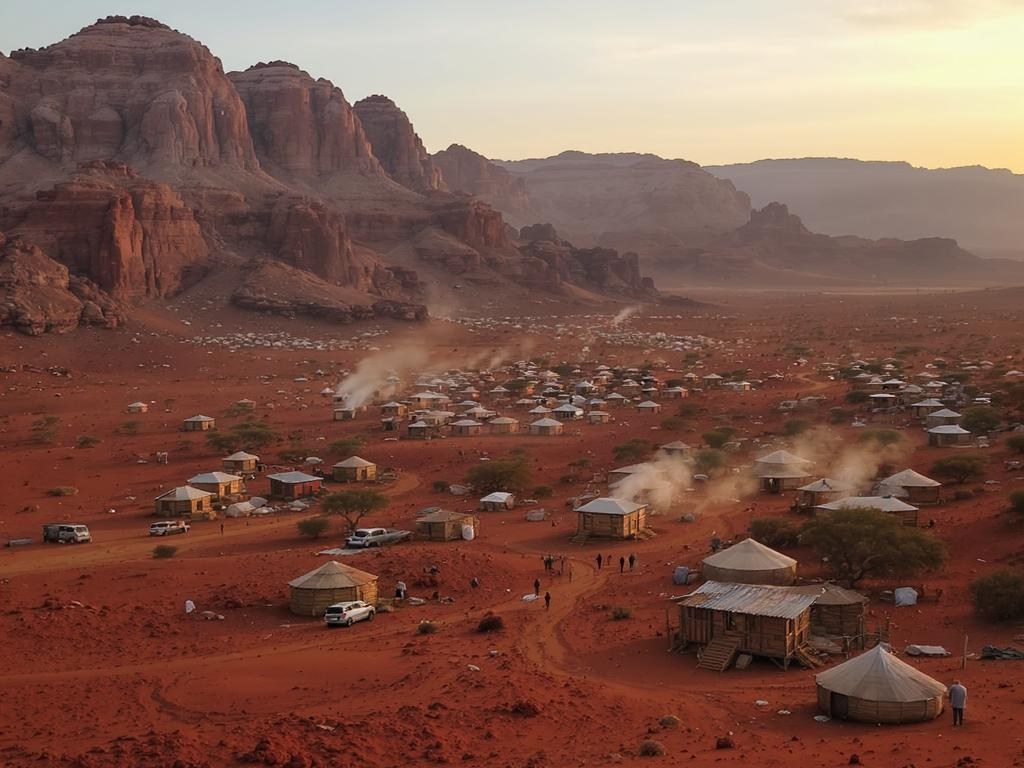
Storms, flooding and fires, exacerbated by climate change and uncontrolled growth, can destroy existing housing and infrastructure. Droughts and conflicts cause large-scale migration. Property owners and governments evict people from vacant land and abandoned buildings. The resulting displacement creates a need for emergency housing – temporary, safe and secure accommodation which can be used while long-term solutions are developed.
Given the unplanned nature of emergency housing, how can this be designed and developed? The following are some of the questions and design inputs I covered in a presentation on emergency housing that I was invited to do for Raw Modular and Tshwane University of Technology.
- Displacement: What caused the displacement of people? Was this fire, flooding, drought, conflict, or evictions? What can be learnt to avoid future displacements?
- People: Who has been displaced? What are their needs? Are there aspects such as health, age, family structures, livelihoods, education, and religion that need to be taken into account?
- Recovery: What is needed to enable people who have been displaced to recover? Emergency housing is usually part of a larger recovery program – how can this be supported? Can supportive links that displaced communities already have, and local resources, be mapped and developed to support recovery?
- Culture: Recovery can be supported in groups by drawing on shared beliefs, customs and practices. How can the design and layout of emergency housing support this?
- Space: Emergency housing layouts and designs can be co-developed with displaced people to enable personalisation and preferred living patterns.
- Adaptability: Can emergency housing be adapted to respond to its occupants’ needs? For instance, can this be easily extended for additional family members?
- Occupant comfort: What are external climate conditions? How can emergency housing be designed to achieve comfortable internal conditions in an energy-efficient way? Which passive design strategies enable this?
- Reusability: Are the components of emergency housing designed and assembled so they can be reused? This reduces the cost of providing emergency housing in new locations and avoids waste.
- Resilience: How can emergency housing sites be resilient to future hazards? For instance, can housing be raised on stilts to mitigate flooding, or can additional strengthening be provided for extreme weather events?
- Local content: Can emergency housing be made of local materials and be constructed by local people? This creates local jobs and economic development that accelerates recovery.
- Weight: How heavy are the components of emergency housing? Where no local materials are available, lighter, less bulky materials are easier to transport and assemble rapidly.
- Assembly: Emergency housing timeframes mean that housing should be completed within days, not weeks or months. This requires instructions that can be readily followed and components that are easy to assemble. This should enable rapid construction by builders who may not have formal training.
- Affordability: How much does the emergency housing cost? Designs and construction processes that are more affordable enable limited Governments and aid agencies’ budgets to be used effectively.
- Standards: Minimum standards are provided by the UNHCR and local governments for emergency housing. These should be considered.
- Performance: Performance targets in the areas above and others can be set. Designs and options can then be explored and developed iteratively to meet these. Pilots also help to refine assembly processes and operational performance.
 Jeremy Gibberd