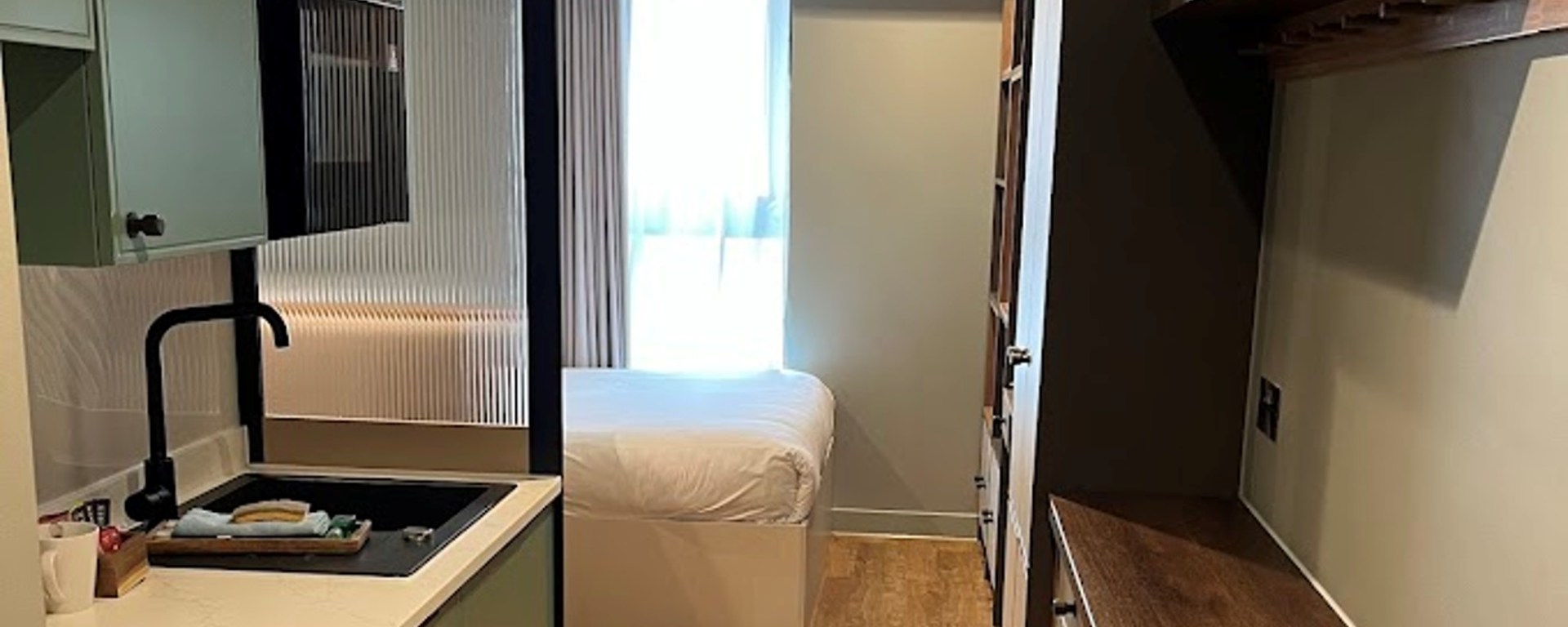
The International Residential Code defines tiny houses as accommodation that is under 37m2. However, there are mobile micro tiny houses that are smaller than 10m2. Cohousing units, which include bathrooms and kitchenettes, are 20-28m2.
At a room level, 6.51 m2 for one person over 10 years of age, 10.22 m2 for two persons over 10 years and 4.64 m2 for one child under the age of 10 years has been defined as the minimum size for sleeping accommodation.
There are minimum standards for access, natural and electric lighting, ventilation and privacy in rooms. At housing level, there are references to condition, modern facilities and services, and thermal comfort
The UK has developed minimum gross internal area standards for housing, which indicate that housing should have a minimum size of 37m2.
However, minimum standards for housing can be controversial. As Alain Bertaud points out, defining minimum areas and facilities for housing makes it more expensive and less accessible to people on low incomes.
One way to tackle this is to understand the day-to-day needs of occupants. If residents want to minimise costs and access employment or education, smaller units within walking distance to work and learning opportunities may be better than larger, more expensive, distant housing that requires commuting.
If residents want to develop new enterprises, affordable working spaces near clients, or in business nodes, networking opportunities, and access to expertise and equipment that can be easily accessed from living spaces may be important.
I look forward to exploring how access to opportunities, shared facilities and equipment, affordability and private space can be balanced in developing Sustainable Temporary Residential Units (STRUs), hotel and co-housing projects that I am working on.
The image is of a cohousing unit in the Ark in London.
 Jeremy Gibberd