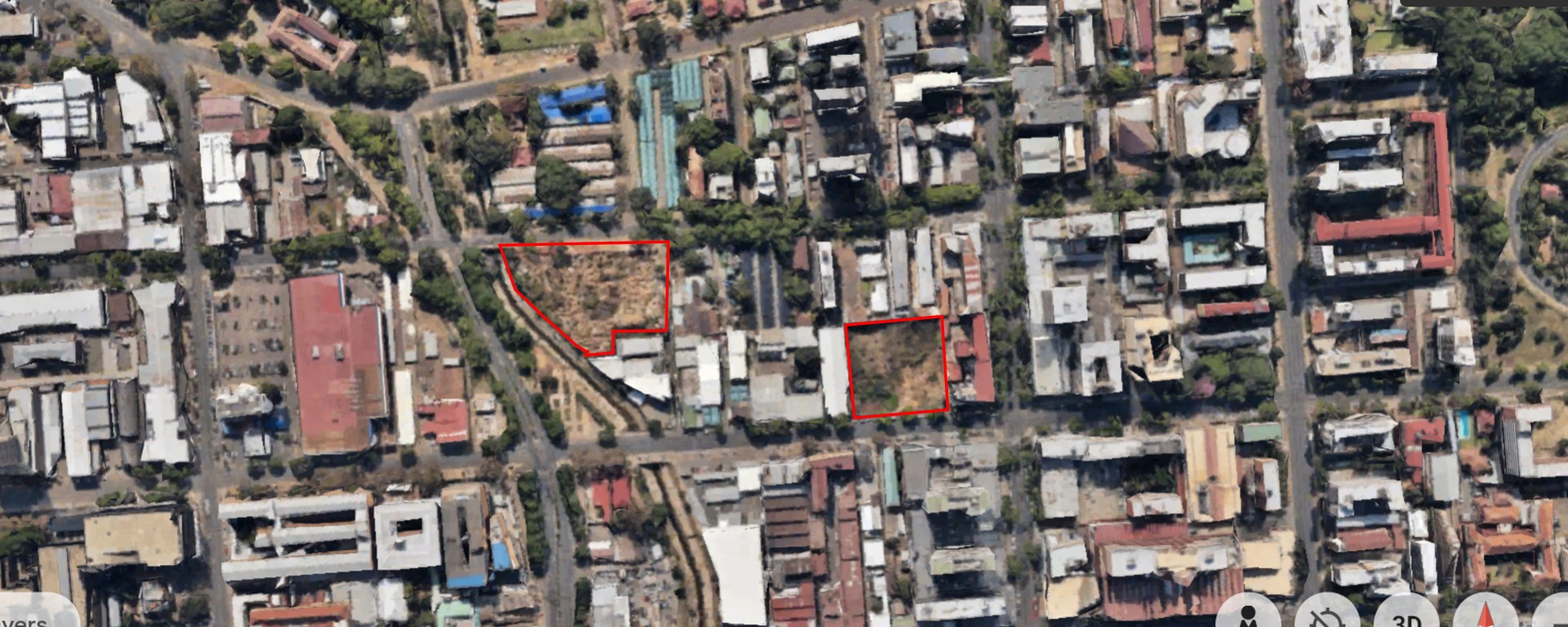
Housing backlogs in South Africa are estimated to be at least 2.4 million. On average, South African households spend between 15 and 20% of their annual income on transport. At the same time, there are many urban sites in cities that are vacant and not being used. For example, the picture above shows 2 large vacant sites in Pretoria. Can these sites be made productive by using them for temporary housing? How could this be made to work? The concept of Sustainable Temporary Residential Units (STRUs) offers some ideas.
What is a STRU?
STRU stands for Sustainable Temporary Residential Unit. STRUs are designed to be manufactured and assembled rapidly, affordably and sustainably. The establishment of STRUs on well-located vacant city sites enables people to access jobs, self-employment, education and services and reduces household commuting time and costs. It transforms vacant sites into productive spaces where people can live and work. Short-term leases can be negotiated and STRUs established to benefit households, landowners, businesses, and councils. STRUs aim to kickstart economic growth and contribute to developing more sustainable cities.
How would STRUs be developed?
To establish STRUs, a lease would be signed with the owner and an entrepreneur (a strupreneur). Site layouts would be developed and planning permission sought. The strupreneur would then assemble the demountable STRUs on site and make these available for rent. Off-grid systems would be used for services to avoid delays and improve affordability, with costs recovered through smart metering.
STRUs can be established at significantly lower cost than conventional housing. This enables rental to be affordable even for households on very low incomes. Calculations indicate rates of return could be above 10%, suggesting that STRUs could be financed and developed by the private sector.
What are the benefits of STRUs?
STRUs have the following benefits:
- Rapid: STRU development is rapid, as prefabrication and off-grid technology enable sites to be established within a month.
- Costs: STRUs are highly affordable (30-60% of the costs of conventional building).
- Construction jobs: STRUs can be manufactured and assembled by people with limited technical skills, providing immediate employment opportunities.
- Entrepreneurs: STRU manufacture, assembly and off-grid service entrepreneurs could be created, creating local small enterprises.
- Housing backlogs: The rapid deployment of STRUs would help address housing backlogs quickly.
- Household costs: Avoiding transport costs and reduced service costs substantially reduces household costs.
- Landlords: Landlords could earn revenue from vacant sites.
- Cities: Cities could use STRUs to revitalise areas and earn additional rates and taxes.
- Businesses: Businesses near STRUs would benefit from additional custom.
What are the potential problems of implementing STRUs?
While STRUS show potential, they may be difficult to establish for the following reasons:
- Site owners: Site owners could refuse to let their sites because they plan to develop these in 2-3 years. Site owners may also wish to charge excessive rental fees for their sites. Both of these could be addressed through 2- 3 year leases with low rentals that could be renegotiated in future.
- Bulk services: The city may not have capacity for new developments, or there may be long delays associated with connections. This could be addressed by providing some or all services using off-grid technologies.
- City: The city may not wish to approve temporary housing within the city and instead prefer large commercial developments. They may also wish not to approve STRU building plans and off-grid services. These issues could be addressed through discussion and agreements with the city to ensure it supported development. These would confirm the short-term nature of STRUs and how these provide a ‘stepping stone’ for future developments.
- Tenants: Having lived in a STRU for 2-3 years at an affordable rent, tenants may not wish to leave these when a site lease expires and STRUs have to be moved. This could be addressed by enabling tenants to move to other STRUs or permanent developments close by.
I would like to acknowledge the valuable feedback from audiences where I have presented STRUs. The suggestions made will be picked up in future refinements. Please feel free to contact me are interested in developing STRUs or have questions.
 Jeremy Gibberd