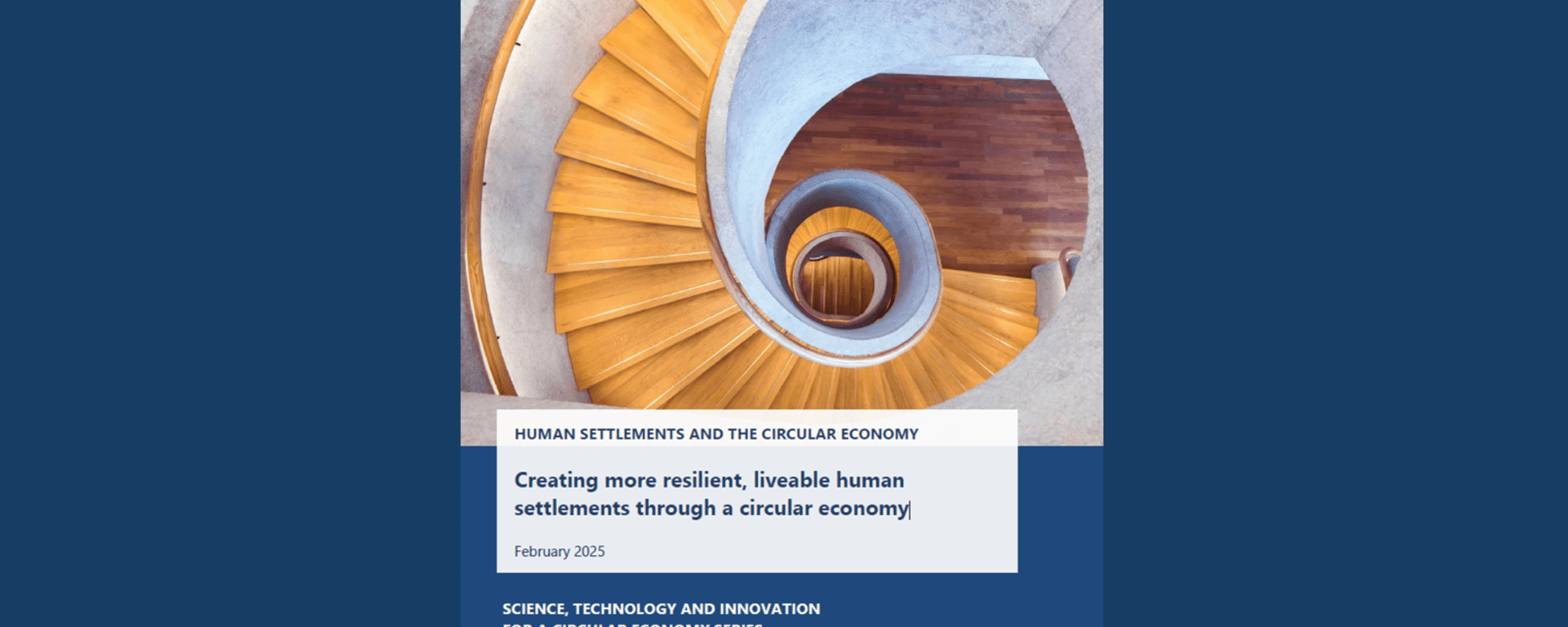
Our research report titled “Human settlements and the circular economy: Creating more resilient, liveable human settlements through a circular economy” has just been published.
The research aimed to understand the implications and potential of the circular economy for human settlements in South Africa. Desktop reviews, stakeholder surveys, focus groups and modeling were used to identify and test circular alternatives to current development paths.
The study identified seventeen circular economy interventions (CEIs) including 15-minute neighbourhoods, rainwater and greywater systems, composting, urban agriculture and deconstruction and reuse that could be applied to human settlements.
A selection of these were modeled to understand potential impacts. Results indicated that circular economy alternatives could have substantial benefits over current approaches. Modeled benefits include reduced waste and carbon emissions, enhanced food security and the creation of new enterprises and jobs.
The report makes a range of recommendations that can be used by local government, built environment professionals, communities and others wishing to develop more circular human settlements. A copy of the report is available here.
 Jeremy Gibberd