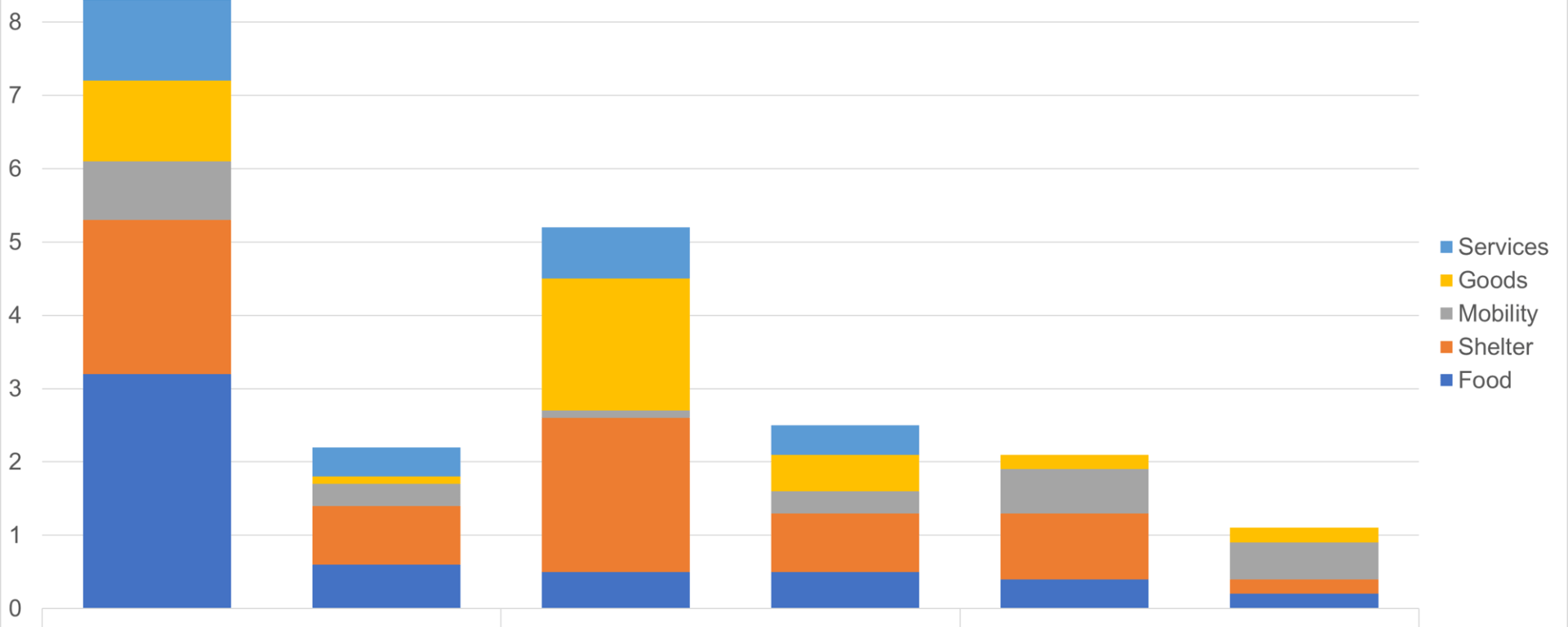
The Ecological Footprint Calculator provides a quick way of measuring living and working patterns in terms of global limitations. Data on food, travel, accommodation and waste is used to calculate an ecological footprint which is then related to the earth’s resources to provide for this. The tool enables rapid assessments of current lifestyles and allows for the impact of alternatives to be quickly ascertained.
As part of a research project, Claire Wagner and I have been exploring how awareness and knowledge about the impact of lifestyle choices can influence behaviour and habits. Participants measure the ecological footprint of their current living and working patterns using the calculator. They then identify areas they would like to change, make these changes, and remeasure their impacts. Participants keep detailed records of their daily living patterns and the factors that influenced their decisions.
The results have been interesting. In all cases, participants have been able to make very large reductions in their ecological footprints, as shown in the participant ecological footprint histograms above.
Feedback from participants indicates that awareness and the ability to measure impacts developed through the project are likely to lead to some changes being sustained and reductions in footprints being maintained.
The project also identified barriers that prevent change, such as affordability (the more sustainable choice was too expensive), availability (the sustainable choice was not available) and safety and security (the more sustainable choice was too dangerous). These results will be of particular interest to planners, designers and facilities managers as they provide guidance on simple measures that could be incorporated into built environments to support more sustainable living and working patterns. A paper on the project has been published and can be accessed here.
 Jeremy Gibberd